How often have you prayed and wondered why God has not acted? Your prayer is fervent and filled with trust in God, but the answer did not seem to come. How easy is it for us to become so frustrated at such times.
There was a time in the life of Jesus when His friends asked Him for help, and they did not hear from Him. At least, they did not hear from Him initially. And when they did hear from Him, it seemed like it was too late.
You are probably familiar with the story. It begins with Jesus' friends Mary and Martha sending a message to Jesus. Jesus is with His disciples. The messenger relays that the one whom Jesus loves is ill. The sisters are telling him that their brother Lazarus is ill, really ill.
Jesus, of course, knows everything about the situation. In response, He waits. He does not immediately go to the town of Bethany in order to be with the sisters and heal their brother. Instead, He remains where He is with the disciples for two more days.
We can imagine that this must have been difficult for Mary and Martha. They knew Jesus is capable of helping their brother, and they trusted that when they asked Him, He would come. Yet, as each day went by and Jesus did not come, they must have struggled to understand what was happening.
Where is Jesus? We know that He can help Lazarus. We need You now. Please come.
And then while they are waiting, Lazarus dies.
We can only imagine how that must have felt for Mary and Martha. They knew that Jesus had healed people that were ill, and if only He had been there, Lazarus would have been saved. They were sure of that.
But now, it was too late. Their brother had passed away. Lazarus had been buried, and now Mary and Martha had begun the period of mourning. Their prayers had not been answered. Their hopes had been dashed.
Perhaps Jesus would come to comfort them in their loss.
Jesus tells the disciples that it was good for Him to wait. And He plainly tells them that Lazarus has died.
Of course the disciples urge Jesus not to go because people in Jerusalem and the area nearby, including Bethany were Mary and Martha, live are ready to stone Jesus.
Jesus explains that because it is not yet His hour, it is safe for Him to go to Bethany.
When Jesus arrives near the home of Mary and Martha, He is greeted by Martha. She proclaims that if only He had been there before Lazarus died, Jesus could have saved him.
Jesus tells Martha that Lazarus will rise again. Martha reponds that she knows he will rise again at the last day.
Then Martha shows an important spark of faith. Disappointed that Jesus had not come before her brother died, she adds that even now she knows that whatever Jesus asks from God, God will grant Him.
She puts the matter in Jesus' hands, but she has faith that even a miracle could occur.
When Jesus meets Mary, she repeats the same idea as Martha that if Jesus had been there earlier, He could have saved Lazarus from death.
When Jesus sees Mary weeping and the mourners, He asks to see where Lazarus is buried. And Jesus weeps.
Although comforted by Jesus' presence, Mary and Martha might still feel the hurt that He had not come sooner and saved their brother.
When He comes to the tomb, Jesus asks for the stone to be moved away. Martha protests because of the odor. And Jesus reminds her that if she believed, she would see the glory of God.
Jesus prays out loud to the Father, and then He calls Lazarus to come out from the tomb.
Lazarus comes out to the astonishment of every one but Jesus.
We can only imagine the reaction of Mary and Martha to seeing their brother alive again. What a miracle!
And they must have realized that their prayers had been answered. Jesus had come and done the incredible in order to restore Lazarus to his sisters.
They had prayed for Him to come and save their brother. Their prayers had been answered, but not in the way which they expected. They had receive much more.
Their brother was alive, and they had seen the awesome power of God act in their very presence.
Although it must have been difficult for Mary and Martha when Jesus did not come before their brother died, they continued to trust in Jesus. They placed everything in His hands. By doing so, they were open to receiving an amazing answer to their prayers--the miracle of Lazarus raised from the dead.
We might want to remember this story when we fail to see answers to our prayers. Or when we fail to see answers that we expect. Instead, we need to remember that Jesus hears every one of our prayers. He is faithful, and He will answer our prayers.
His answers might not be what we expect. At that point, we have to recognize that it is we that need to change rather than God. We often get in the way of receiving what God has for us because we believe that it is not the best for us.
We need to trust in Him and to be open to how He wants to work in our life. Through that trust and openness, we can receive the answers to our prayers. Through that trust that the Lord always loves us and will only give us good and perfect gifts, we can accept the answers to our prayers.
Posted by David at
1:29 AM
|
Comments (1)
|


Welcome to our Used Book Sale!
If you would like to purchase any of the books, please leave a comment with your email address. I will reply to your email with a total including shipping. If you agree with going ahead with the purchase, I will send you a PayPal invoice. All books will be shipped by USPS media mail using the following flat fees:
Offers for amounts other than the list price will be considered.
Postage (Flat Fees):
1 to 3 Books: $5.00
4 Books or more: $7.00
For other books for sale, see
Shower of Roses.
Little Latin Readers
Christus et Apostoli Reader - $7.00
Christus et Apostoli Pronunciation Guide - $6.00
Vita Mariae Pronunciation Guide - $6.00
Italia Pronunciation Guide - $6.00
Stories of America, Volume 1 - $10.00 [SOLD]
Stories of the Nations, Volume 1 - $10.00 [SOLD]
Faith and Life Series
The Life of Grace Student Text, Third Edition - $10.00 [SOLD]
Growing with Grammar
Student Manual and Answer Key, Level 7 (Both Items) - $14.00
Easy French, Step-By-Step - $3.00
Jotham's Journey - $2.00
Lafayette and the American Revolution - $5.00 [SOLD]
Apologia Exploring Creation with General Science, 2nd Edition
MP3 Audio Book CD - $18.00 [SOLD]
Multimedia Companion CD - $16.00 [SOLD]
Tests - $2 [SOLD]
Answer Book (Not Shown) - $8 (It is missing a number of the tests, but includes ALL answers)[SOLD]
Lewis & Clark: The Journey of the Corps of Discovery- $2.00
The World of William Penn - $9.00 [SOLD]
Carry On, Mr. Bowditch - $5.00
Poor Richard - $13.00
The Year of the Horseless Carriage (Hardback) - $7.00
Early Modern & Epistles - $14.00
A Christmas Carol - $1.00
Johnny Tremain - $1.00
Stowaway - $4.00
Call of the Wild - $2.00
(All Four for $6.00)
DK Biography of Amelia Earhart - $2.00
Poema para chicos y grandes, Level 1
(Spanish Poems and Coloring Book with Audio CD) - $8.00
Who Has God's Life? Teacher's Manual - $13.00
The Story of Modern France - $11.00
Posted by David at
7:40 AM
|
Comments (0)
|
The Shepherds had an Angel
The Shepherds had an Angel
Christina Rossetti
The Shepherds had an Angel,
The Wise Men had a star,
But what have I, a little child,
To guide me home from far,
Where glad stars sing together
And singing angels are?
Lord Jesus is my Guardian,
So I can nothing lack;
The lambs lie in His bosom
Along life's dangerous track
The wilful lambs that go astray,
He bleeding fetches back.
Lord Jesus is my guiding star,
My beacon-light in heaven:
He leads me step by step along
The path of life uneven:
He, true light, leads me to that land
Whose day shall be as seven.
Those Shepherds through the lonely night
Sat watching by their sheep,
Until they saw the heavenly host
Who neither tire nor sleep,
All singing 'Glory glory,'
In festival they keep.
Christ watches me, His little lamb,
Cares for me day and night,
That I may be His own in heaven:
So angels clad in white
Shall sing their 'Glory glory,'
For my sake in the height.
The Wise Men left their country
To journey morn by morn,
With gold and frankincense and myrrh,
Because the Lord was born:
God sent a star to guide them
And sent a dream to warn.
My life is like their journey,
Their star is like God's book;
I must be like those good Wise Men
With heavenward heart and look:
But shall I give no gifts to God?
What precious gifts they took!
Lord, I will give my love to Thee,
Than gold must costlier,
Sweeter to Thee than frankincense,
More prized than choicest myrrh:
Lord, make me dearer day by day,
Day by day holier;
Nearer and dearer day by day;
Till I my voice unite,
And sing my 'Glory glory'
With angels clad in white;
All 'Glory glory' given to Thee
Through all the heavenly height.
Posted by David at
9:08 PM
|
Comments (0)
|
Sunday, December 11, 2016
Jesse Tree Pictures are Being Added Daily
Daily posts on the Jesse Tree are being added to the
Duc In Altum Facebook page. The photo album which contains the drawings can be accessed
here.
Here is today's post:
Jesse
-- The Bible says that the Messiah would come from Jesse's family. He
was the father of King David. And as a descendant of the family of
David, Jesus is called the Son of David.
I am also adding these to #illo_advent on Twitter which has amazing illustrations added each day by the many talented artists who are contributing.
Posted by David at
7:00 PM
|
Comments (1)
|
Sunday, November 13, 2016
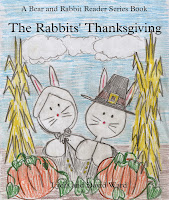
The Rabbits' Thanksgiving is Available for Free from November 13th through 17th
Thanksgiving is right around the corner. If you are looking for a children's Thanksgiving eBook to read aloud with your children or for your early readers to read, you can get
The Rabbits' Thanksgiving for Kindle for free from November 13th through November 17th:
Celebrate Thanksgiving with Tom and Martha Rabbit! Follow along with
them and their family in the days before Thanksgiving as they get ready
for the holiday. Then join Tom and Martha on Thanksgiving Day when
their celebration continues with family, food, fun, and giving thanks.
To get a copy, simply click on the image below or click
here and download the book to your Kindle device or to your Kindle App. You can also find the book by searching for
The Rabbits' Thanksgiving in the Kindle Store.
Please also provide any feedback you have on the book on
Amazon. Thank you.
Posted by David at
7:30 AM
|
Comments (0)
|
Saturday, October 08, 2016
See Your Dreams Come True
We All Have Dreams
I have yet to meet someone who does not have at least one dream. Each person carries within him or her a dream (or dreams) of doing something that makes a difference in that person's life and the lives of others. Many people know what that dream is, but it seems that many have lost touch with that dream. Over time, the dream has been buried under disappointment, daily life, fear, and striving for what is not the real dream. However, it is never too late to uncover that dream and turn it into a reality. One way to do that is to present that dream to your mind as a picture it sees until it becomes a reality.
Dreams that we have for our lives are not unlike dreams that we have in our sleep. Many times the dreams that we have at night are simply manifestations of our minds processing what we are subconsciously thinking. Our minds take the raw materials of what we have seen and process those things in a new way that we experience as a dream while we sleep. The point is that our brains continue to work even when our body is sleeping in order to help us in the moment and as we move into the future. Our mind is working to help us make sense of our lives while we are awake and while we are asleep.
Often times our dreams can be quite vivid. Who has not had a dream that was so vivid that you thought it was real? The picture in your mind was as real to you as what you see when you are awake. How is that possible? It is is possible because you actually see with your mind even when you are awake. The images captured by your eyes are sent to your brain in order for your brain to make them into what you “see”.
How to See Your Dreams Become True
With this understanding of your subconscious mind working to understand your life and the fact that your brain is what actually helps you “see”, we can use these concepts to help our dreams become a reality. One way to do this is to put in front of your mind images of what you would like to see manifested in your own life. By doing that, you are presenting to your mind the material it will use to help make what it sees actually happen in your life. The idea is to feed your mind with what you want in order to use the power of your mind to help bring that about in your life.
There are many methods of accomplishing this, and I am going to suggest one that you can use. The method is quite straightforward. Simply find images of your dreams and spend a brief amount of time looking at those images each day. For instance, if one of your dreams is to share your story with others in order that they can learn from you, you should find an image of how you visualize that occurring. Maybe you want to speak to students to share your story. Find a picture on the Internet of someone speaking passionately to students and print it out. Then at least twice a day, preferably in the morning soon after you have awoken and right before you go to bed, look at the picture and think about you being that person in the picture who is helping the students by telling them your story.
As you spend time feeding this image to your mind, you help your subconscious mind to begin to make it actually happen. The power of that idea fed as an image to your mind will be the raw material that helps your dream become a reality. You will start to overcome barriers that you have set up such as fear of public speaking or wondering why students would listen to you. Eventually, you will find that your life has become the image and you are actually speaking in front of students sharing your story.
Does this sound too good to be true? It is not. It happens all the time in your life right now. What you spend time thinking about is what your life looks like. If you think about cooking and recipes and watch cooking shows, you probably find yourself in the kitchen cooking and baking. You do not consider this too good to be true. All that happens is that what you think about is what you end up doing. You start to take action by buying cooking equipment and ingredients. You socialize with people interested in cooking. You start to share your cooking with family and friends. You try new recipes. You start to just happen to come across things of interest to you in cooking. The same can be true for any of your dreams. All you are doing is making a conscience decision as to what you want to place in front of your mind in order to manifest it in your life.
Once you begin the process, you might want to expand it to several key areas in your life. The earlier example about talking to students might fall under the category of Vocation or your calling. (I prefer the term Vocation rather than Work Life, as your calling should include your work life and other areas to which you felt called to spend your time.) I would suggest finding images that represent the dreams you have for the following areas in your life:
- Relationships
- Money
- Health
- Vocation
- Lifestyle/Travel
- Social
- Generosity
- Spiritual
- Personal Development
You can organize these images in one place such as a poster board. (These are often termed a vision board.) By placing the images on the board, you have a handy device that you can view at least twice a day spending no more than a few minutes viewing the images. There are certainly other ways to organize the images, and what you choose should make it easy for you to insure that you do it twice every day and that the images stay in good shape.
How to Add Jet Fuel to the Process
In order to make the process a huge success, you need to add an important ingredient. That key ingredient is emotion. As you look at the images you want to manifest in your life, you should think about how it feels to already have that in your life. For instance, as you look at the picture of the person speaking to the students, feel what you imagine you would feel as you spoke to those students. You would be excited, passionate, compassionate, and loving. You want what is best for those students, and you are giving of yourself to them. You might also feel proud of yourself for achieving this goal.
Adding positive emotions is like adding jet fuel to the process. What you think about with emotion carries greater weight in your mind. Think about that from your past. Memories often have emotions surrounding them that make them much more poignant. And, the emotions are what might make the memory one that is stronger than another memory. In addition, often when you are experiencing a certain emotion you remember particular memories. When you are happy, you will think about happy memories, and when you are sad, you might think of sad memories. By associating positive emotions with you want to manifest in your life, you are telling your mind that having this come about will make you happy.
Conclusion
Your dreams are an important part of who you are, and it is imperative that you pursue your dreams until they become a reality in your life. By spending time each day thinking and feeling about images which represent your dreams, you are feeding your mind what it needs in order to help manifest those dreams in your life. The more that you focus on your dreams, the more you will do or have happen in your life that move you to the ultimate fulfillment of your dreams.
Posted by David at
7:30 AM
|
Comments (0)
|
Saturday, October 01, 2016
The Write Way to Get More Done

Everyone is busy these days, and we all want to find that additional time to get everything done. Time is a precious resource, and no matter what we might wish for, we only have twenty-four hours in a day. There is no use looking for more hours. Instead, the key is to use our hours in a more efficient manner. The most important way to be more efficient is to be clear about how we spend our hours.
One way to develop that clarity of purpose is to have written goals. Many time management experts note that you are more likely to accomplish what you want to complete by writing it down on paper. The very simple exercise of writing down your goals provides that clarity of purpose that helps you be more efficient. As a Dominican University study noted, those who wrote down their goals were more likely to achieve those goals than those who did not write down their goals. Given this, it seems that it only makes sense to begin a habit of writing down your goals.
Right now, you might think to yourself that you already keep a “To Do” list and be ready to move on to reading something else. The difference is that if you keep a “To Do” list you are still not focusing on your goals. At best, your “To Do” list is simply very short term goals. And each day, you and I get caught up in trying to complete those short term goals. There is nothing wrong with that as we all need to complete tasks that include buying groceries, replacing the light bulb in the hallway, and getting new glasses. The problem is that it does not help us with clarity about long term goals which are the goals that matter and give more meaning to our lives. If we clarify those big goals, we can keep everything else in perspective and not feel frustrated that we are just keeping our heads above water.
How should you do that? Let me suggest one simple three-step method that is easy to follow and can become a vital habit in your efficiency and success.
Step One
The first step is simply to write down your goals on a piece of paper. Write down ten to twenty long term goals. The goals should be written in the present or past tense as if you have already accomplished the goal. Also, the goals should be specific. The more specific you write your goals, the better. For instance, here are some sample goals:
- I own a Honda Accord.
- I have taken my family on a trip to Rome.
- I am the director of sales.
- I am an author of a book on selling.
- I have a brand new deck out the back door.
- I speak Spanish.
- ...
Then put down a deadline next to each goal. The deadline should be an actual date (09/20/2017) not a time span such as a year from now.
- I own a Honda Accord by November 30, 2017.
- I have taken my family on a trip to Rome by August 31, 2017.
- I am the director of a sales by September 30, 2017.
- ...
At this point in time you can congratulate yourself as you have done something that only 10% of the American population has done—produced a written list of goals.
Step Two
The next step is take your list and review it twice a day. You should review it once in the morning and once before you go to bed. As you review the goals, you might want to read them out loud. More importantly, read them with the feeling that you will have when you have accomplished the goal. Imagine how you will feel and what you will experience when your goal has been accomplished. You should create a mental picture of living with your accomplished goal. For example, you should picture yourself behind the wheel of your Honda Accord as you drive down the road. Or think about sitting in your new office as the director of sales.
An optional way to review this is to write your lists every morning. This daily approach is helpful in two important ways. First, every day, you go through that important exercise of physically writing down your goals with pen and paper. There is something vitally important about that physical connection with your hand and your mind that helps get the goal completion process going. It is the beginning of the process by which your goal will be met. Namely, what your mind thinks of will be accomplished by your hands. It starts with your hand writing down your mind's idea.
The second benefit of writing new lists each day is that you keep your list of goals fresh. Your list of your ten to twenty long term goals might change over time. If you do not recall all of your goals, your mind is simply deprecating the ones you do not remember in order to make room for ones that are more important to you at that moment. In addition, your mind might be clarifying your goal. For instance, instead of adding a back deck, you decide you would rather add a garage to protect your Honda Accord.
Congratulate yourself again. You have now started doing something that only 5% of Americans do—reviewing your written goals.
Step Three
This last step is optional. However, it can help jump start the process of accomplishing your goals. The process of goal writing and reviewing the goals each day using a vivid imagination works by placing these goals in your subconscious mind. Once your goals are in your subconscious mind, your mind begins to work on how to accomplish the goals. The next thing you know you start drawing people and things to yourself that guide you to completing your goal.
The way to jump start that process is to pick one of your long term goals and begin to write down at least 20 actions that you can take to accomplish that goal. For this activity, you might want to pick a goal that will have the most important impact upon your life. Take out a fresh piece of paper and write that goal at the top. Then in a manner similar to brain storming, simply write 20 actions that will help you reach that goal. Another tip is to make it fun. Here is a sample:
I have taken my family on a trip to Rome by August 31, 2017.
- Setup an automatic payment that saves money to a trip account.
- Research plane tickets for flying to Rome.
- Speak with Mary and John who went to Rome a few years ago.
- Research the places we would want to see when we are in Rome.
- Look at options for where to stay.
- Get the kids excited to go on the trip by setting up a trip fund jar in the kitchen. Any spare change is put in the jar. Check the jar every so often and plan to use it to buy gelato once you get to Rome.
- Get everyone thinking about Italy by eating Italian food, watching shows on traveling to Rome, and learning some simple Italian phrases.
- …
Conclusion
In order to get more done, you need clarity about what you are trying to get done. One effective way to gain clarity is to have clearly defined written goals which are specific and have a deadline. These goals should be long term goals that have a major impact upon your life. In addition to writing them down, these goals should be reviewed in the morning and the evening every day. As you train your mind to clarify what you want, you will keep focused on your goals and become better at prioritizing everything else that competes for your time and attention.
Posted by David at
7:30 AM
|
Comments (0)
|
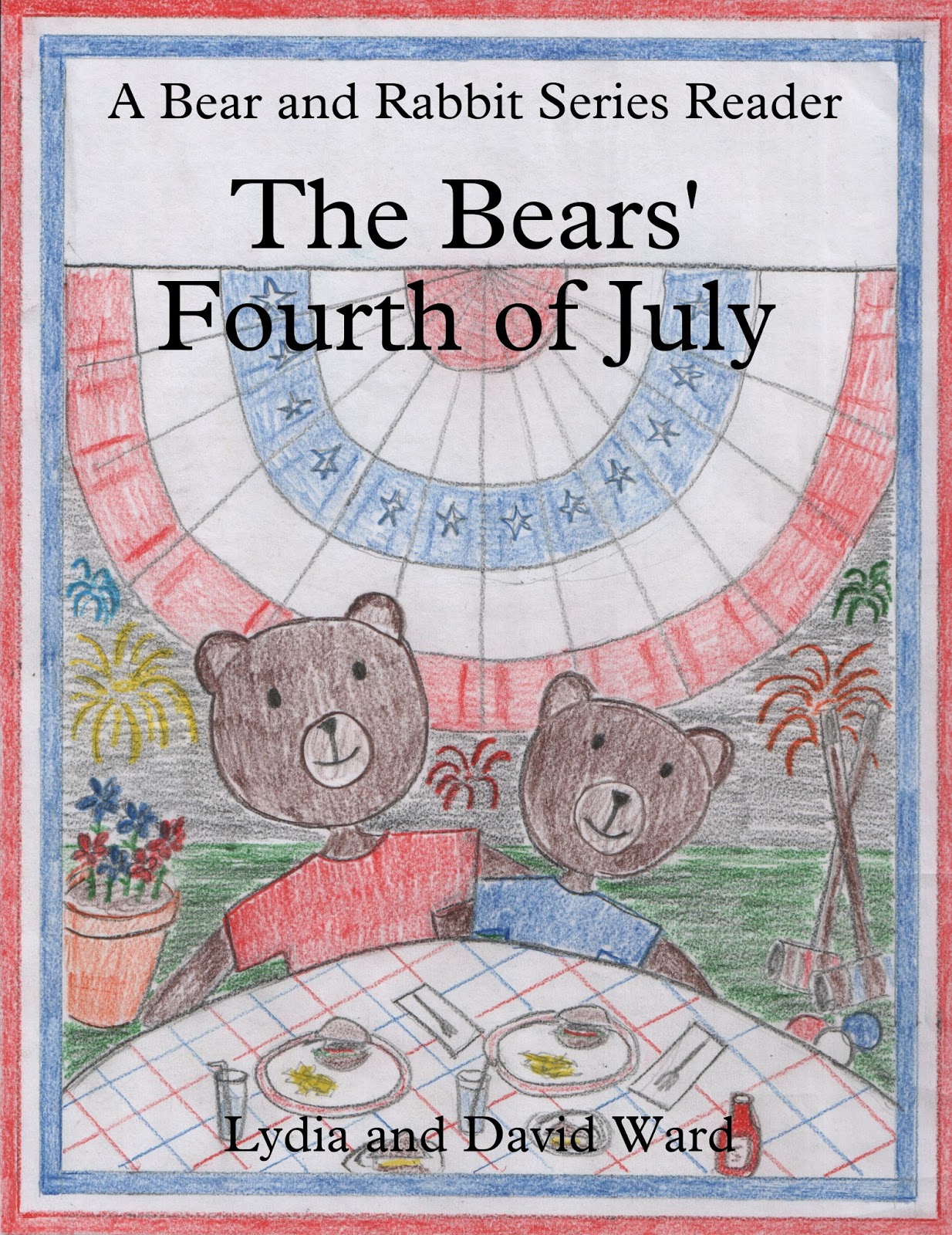
The Bears' Fourth of July is Available for Free from Kindle Through June 21st
The Fourth of July is right around the corner. If you are looking for a children's Fourth of July eBook to read aloud with your children or for your early readers to read, you can get
The Bears' Fourth of July for Kindle for free through the end of the day on June 21st
Simply click on the image below or click
here and download the book to your Kindle device or to your Kindle App. You can also find the book by searching for
The Bears' Fourth of July in the Kindle Store.
Please also provide any feedback you have on the book on
Amazon. Thank you.
Posted by David at
11:30 PM
|
Comments (0)
|
Garden of the Good Shepherd Easter Calendar
One of the beauties of the Church is the celebration of seasons. Christmas is not just a day. It is a season that last weeks. Similarly, Easter is a seven week season. There is great wisdom in this plan. These celebrations are for mysteries that cannot be contained in weeks of pondering, let alone a single day.
This Easter Season we have added another new tradition that takes advantage of the week of weeks of the Easter season. For years, LG had wanted to purchase the Easter sticker calendar called the Garden of the Good Shepherd. However, the book was fairly expensive. The original book which is now sold out can be seen
on Amazon. It came complete with illustrations by Tomie dePaola.
LG was thrilled to find out that Charlotte of
Waltzing Matilda had kindly reproduced the 50 symbols of the original Garden of Good Shepherd book and made them available free of charge on her
site.
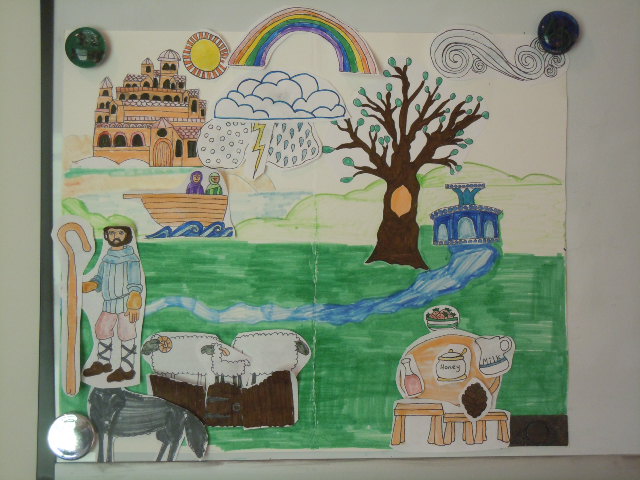
Thanks to Charlotte's generosity, LG was able to make her own Garden of the Good Shepherd "Sticker" Calendar. On her blog, she provided wonderful versions of the 50 symbols along with the background images. These can be found
here. LG took it from there to draw the rest of the background and to color everything. She decided to use magnets. The background is attached with magnets on a magnetic white board. We have attached small pieces of thin magnets to each symbol. Then, each day a new symbol is added to the picture.
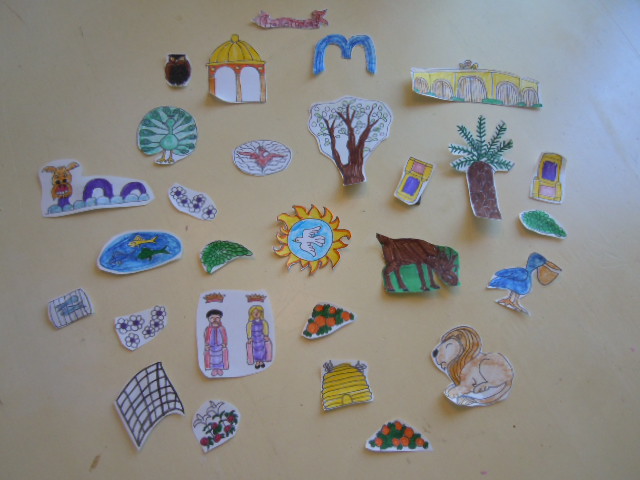
There is a theme for each week of the seven weeks of Easter. For instance, the first week's theme is the Good Shepherd. The symbols for that first week include a shepherd, a shepherd's staff, a gate, a sheepfold, a wolf, and several sheep. In addition, each day there is also an associated Scripture reference. From the first week the Scripture references are from Psalm 23 and John 10 where Jesus called Himself the Good Shepherd. Here is what the calendar looks like part way through week four.
And here are the remaining symbols for the rest of the 50 days.
We always enjoy adding to our liturgical traditions. And this new calendar is certainly a well-welcomed addition.
Posted by David at
9:30 AM
|
Comments (0)
|
Are you interested in Improving your Writing? Try the Seven Secrets to Writing Success
Are you Interested in improving your writing? This short Kindle book describes seven secrets which will help anyone improve their writing whether you are a student or a business professional.
In the book, you will learn the easy steps to having a plan, getting organized, staying focused, and successfully completing your writing task. These are tried and true secrets that can be used again and again and will enable you to become a better writer and to complete writing tasks faster.
Click on the book below in order to preview its contents.
Posted by David at
9:30 AM
|
Comments (0)
|
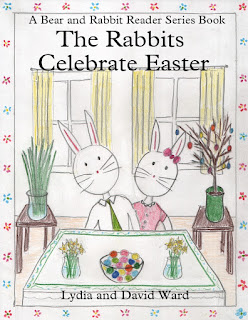
The Rabbits Celebrate Easter is Available Free from Kindle March 18 - 20, 2016
Easter is right around the corner. If you are looking for a children's Easter eBook to read aloud with your children or for your early readers to read, you can get
The Rabbits Celebrate Easter from Kindle for free March 18 - 20.
Simply click on the image below or click
here and download the book to your Kindle device or to your Kindle App. You can also find the book by searching for
The Rabbits Celebrate Easter in the Kindle Store.
Please also provide any feedback you have on the book on
Amazon. Thank you.
Posted by David at
10:00 AM
|
Comments (0)
|
Wednesday, March 02, 2016
Jesus Tree: A Review of Jesse Tree Treasures' Jesus Tree Kit
Our family's devotional discovery this Lent has been the Jesus Tree. Although similar to the Jesse Tree of Advent, it has some subtle differences that make it more than just a devotion which has been applied to a different season of the liturgical calendar.
Instead, in its own right, the Jesus Tree is a very beautiful devotion that helps mark the days of Lent with stories from the Gospels which cover our Lord's life from His youth through His passion, death, burial, and resurrection. By focusing on Christ's life and death, the devotional focus becomes not on the anticipation of Christ's second coming or His first coming as a baby, but on what He has fulfilled as the One who came to redeem us.
Another way to view the differences is to note that the Jesse Tree of Advent focuses on the roots of Christ's first coming through marking important events of salvation history prior to the birth of Christ. The Jesus Tree focus on the fruit of His coming, namely, His adult life, passion, death, and resurrection.
In this devotion, during the days of Lent, there are familiar parables such as the Prodigal Son and the Lost Sheep. The days also focus on Jesus' healing of the 10 lepers, the centurion's servant, and the man with the withered hand. Finally, the stories include His miracles of changing water to wine, multiplying the loaves and fishes, and raising Lazarus from the dead. Each of these stories teach about His Kingdom and point the way to why He came--to die and rise again in order to save us from sin. This theme is underscored by the days of Passion Week which include Palm Sunday, the Last Supper, Good Friday, and Holy Saturday.
If you are looking to add this powerful devotion to your own family's Lenten practices, you might want to consider purchasing the Jesus Tree from
Jesse Tree Treasures. They provide a high quality, well-made Jesus Tree that consists of 64 wooden discs. The discs have stickers attached with attractive pictures, titles, and Scripture references for the daily devotions for Lent (40 days), the Sundays of Lent (7), and several bonus days (St. Patrick's Day, St. Joseph's Day), and some of the days of the Easter season. The kit includes a card with each of the days listed along with the story title and Scripture reference for each story. A bag is provided to keep the discs. Finally, it was packaged in an attractive cardboard box with an gold elastic band to hold it together. The high quality certainly adds to the devotional aspect of this version of the Jesus Tree, and the product is very durable and will last for many Lents in the future.
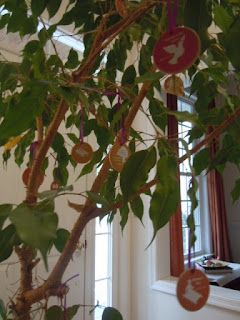
The discs can be used any way you would like. Two suggestions for use which are listed on the store include adding a magnet to each disc or hanging them from a tree. We have chosen the latter. Using a small drill bit, holes were put in each disc and a purple piece of ribbon was tied to the discs. We conveniently have a ficus tree in the front hall which is perfect for hanging the discs. The discs could also be simply laid on a table each day in some pattern that added to the idea that the tree was growing. In our case, the ficus tree "grows" with ornaments throughout Lent and even into Easter when our tree will have been decorated with eggs and other Easter decorations.
I highly recommend the devotion of the Jesus Tree for your family's Lent, and I certainly recommend the Jesus Tree from
Jesse Tree Treasures as a wonderful way to practice the devotion.
Note, I was given a discount on the purchase of the Jesus Tree from
Jesse Tree Treasures as part of my reviewing their Jesus Tree.
Posted by David at
9:30 PM
|
Comments (0)
|
Saturday, February 20, 2016
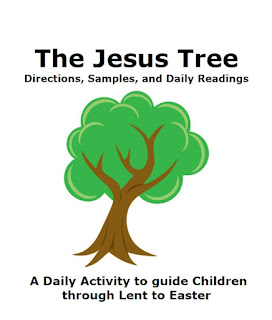
The Jesus Tree: A New Lenten Tradition
In our family, we always enjoy adding new traditions to our celebrations of the liturgical seasons. And this year, we have been introduced to one for Lent that will be sure to be part of our Lenten seasons for years to come.
The new tradition is the Jesus Tree. It is similar to the Jesse Tree of Advent. The idea is to mark the days of Lent with passages of Scripture and a tangible symbol from the life of Christ beginning with His presentation in the Temple through His Passion and Resurrection. It is a great way to reflect on our Lord's life, suffering, death, and resurrection during our Lenten journey.
For each day there is a passage of Scripture and a symbol which represents the Gospel account. For instance, for the Presentation, the symbol might be the two doves which St. Joseph brought to the Temple in order to fulfill the Law. And for the Gospel account of Jesus as the Good Shepherd, the symbol is a sheep. As you move through Lent, you add the symbols to the tree, and the bare tree becomes filled with the life of Jesus.
We ordered one Jesus Tree online, and in upcoming post, I will provide a review of that
Jesus Tree.
However, before that arrived, we made our own felt and flannel version based on a kit which you can order online.
And here is a sample of some of the symbols:
If you are interested in making your own, I put together a downloadable Jesus Tree Guide which includes a list of materials you will need, instructions on how we made ours, pictures of all the symbols, and the daily readings from both Scripture and a popular picture children's Bible--the New Catholic Picture Bible.
The Jesus Tree Guide can be purchased from
Etsy or
Teacher's Pay Teachers. Whether you purchase a Jesus Tree or make your own, perhaps you will add this tradition to your family's Lenten journey.
Labels: eBook
Posted by David at
7:30 AM
|
Comments (0)
|
Wednesday, February 03, 2016
Free Bible Study Series from St. Paul Center--"The Bible and the Virgin Mary"
The St. Paul Center, which was founded by Dr. Scott Hahn, is offering a free Bible Study Series on the Bible and the Virgin Mary. The series of 12 videos will begin on Ash Wednesday, February 10th. Each week a new video will be released which explores the truths about the Blessed Virgin Mary from Scripture.
The St. Paul Center was founded in order increase the love of Christ through the increase of Biblical knowledge. The video series is sure to be a great addition to their materials.
In order to participate, you must register. Registration and more information, can be found
here.
Posted by David at
7:00 PM
|
Comments (0)
|
New Calendar Cards: Angels in the Bible and the Apostles
I am excited to announce that two new sets of Calendar Cards have recently been completed, and they are now available on
Etsy and
Teacher's Pay Teachers. The two sets are Angels in the Bible and the Apostles.
Both are sets of 31 flash cards with a piece of artwork on one side and interesting information on the reverse side. They are available in a PDF format and can be printed out in order to make the flash cards. They can also simply be used in the PDF format.
Angels in the Bible Calendar Cards
The Angels in the Bible Calendar Cards are a fun way to learn about the
important role of angels in the Bible. There are several introductory
cards for the first several days which answer the questions of who are the angels,
where are the angels, how many angels are there, and what is their role.
The remaining cards in the set of 31 cards go through selected stories
in the Bible in which angels appear.
Some of the stories over the 31 days include passages from the Bible
where Abraham, Moses, Gideon, Elijah, Mary, Joseph, and Peter encounter angels. The Bible reference for each story is included in a separate table. Also, a prayer to your Guardian Angel is provided which is suitable for print out and display.
The Apostles Calendar Cards
The Apostles Calendar Cards are a great way to introduce students to the
twelve apostles of Jesus. Through 31 days of calendar cards,
students are provided fascinating information about each of the 12
apostles. There are two cards for each apostle which provide
biographical information about the apostle, the apostle's feast day,
some patronages and symbols of the apostle, and what the apostle did
after Pentecost.
Both sets of cards include information about the artwork displayed on the front of each card. In a separate table at the end, the title, artist, date, and current location of each piece of artwork is listed.
With 31 cards in each set, these can be used for any month of the year or simply used as flash cards for learning about angels and the Apostles.
Labels: eBook
Posted by David at
9:30 PM
|
Comments (0)
|
Monday, November 30, 2015
Online Advent Calendar from the Franciscan Monastery of the Holy Land in America
Advent is a fairly big season in our family. We have already brought out the Jesse Tree, the Advent calendars, and various other Advent related items. You can see some of the ways in which our family celebrates Advent
here.
We really enjoy opening the Advent calendars each day throughout the season. We have at least 4 calendars that we use each year. (All of these are re-usable; we only used the chocolate or candy variety for a year or two.) The oldest Advent calendar we own is a simple card stock one with a picture of the Nativity. There is a Scripture reference behind each door which takes you through the Christmas story. The latest Advent calendar is from Caspari. It is a large Christmas tree, and it has fun Christmas-themed pictures behind each window. No matter what the calendar contains, we enjoy opening them each day to see what surprise is behind the window as we count down the days of Advent toward Christmas.
I have always wanted to find a good online Advent calendar, and I think that I have found one.
The
online Advent calendar which I am excited about is provided by the Franciscan Monastery of the Holy Land in America. These are the Franciscans who are Custodians of the various Shrines of the Holy Land. Their monastery in the United States is in Washington, D.C., and it is definitely worth a visit if you are in the area. We have had the privilege of being able to visit the monastery several times.
The gardens are absolutely beautiful. Inside the main building, they have built replicas of some of the shrines of the Holy Land including the Church of the Holy Sepulcher. Outside the lower garden area, they also have a replica of the grotto at Lourdes. It is quite impressive. From what I understand, the Franciscans are prepared for their assignment in the Holy Land at this monastery.
I just came across their Advent calendar. There seems to be a video with a meditation on the readings for each Sunday and the rest of the days of the week provide information about the liturgical significance of the day. If you are looking for a way to "count down" to Christmas and prepare your heart for Christ's coming at Bethlehem, this might be a good option for you. It can be found
here.
Posted by David at
8:00 AM
|
Comments (0)
|
Saturday, November 21, 2015
Introducing Calendar Cards: Christmas Around the World
In
LightStone's Etsy Shop, we have introduced Calendar Cards. Calendar Cards are 31 cards which cover a particular topic. The first edition is appropriately, Christmas Around the World in anticipation of next month.
The Christmas Around the World Calendar Cards introduce different
Christmas traditions which are celebrated in selected countries around
the world. Each country has two days. The first day for each country
describes some of the unique Christmas traditions of the country, and
the second day of the country lists how to say "Merry Christmas" in the
language(s) of that country. The
days can be printed out or read from the PDF.
Through November 28th, the Christmas Around the World Calendar Cards can be obtained for 40% from
LightStone's Etsy Shop using the coupon code THANKSGIVING2015.
Update, as of November 30th, the Christmas Around the World Calendar Cards are also available at CurrClick and Teachers Pay Teachers. Labels: Curriculum, eBook
Posted by David at
2:30 PM
|
Comments (0)
|
Tuesday, November 17, 2015
Although we are still preparing for Thanksgiving, Advent will be here before we know it.
Advent is always a very special time in our home. During the four weeks, we enjoy preparing ourselves and our home for celebrating the birth of Christ. We generally have several Advent calendars we open each day. We participate in Giving Tree projects for the collection of gifts, clothing, and food. There are special feast days--Our Lady of Guadalupe, the Immaculate Conception, and St. Lucia--which we celebrate. There are many special events, as well. And of course, many people in our community put up beautiful decorations and lights which it is fun to enjoy. It is always a time of high energy which we can use for preparing our hearts for celebrating the wonder of God's gift to us--His Son born as a child to the Virgin Mary.
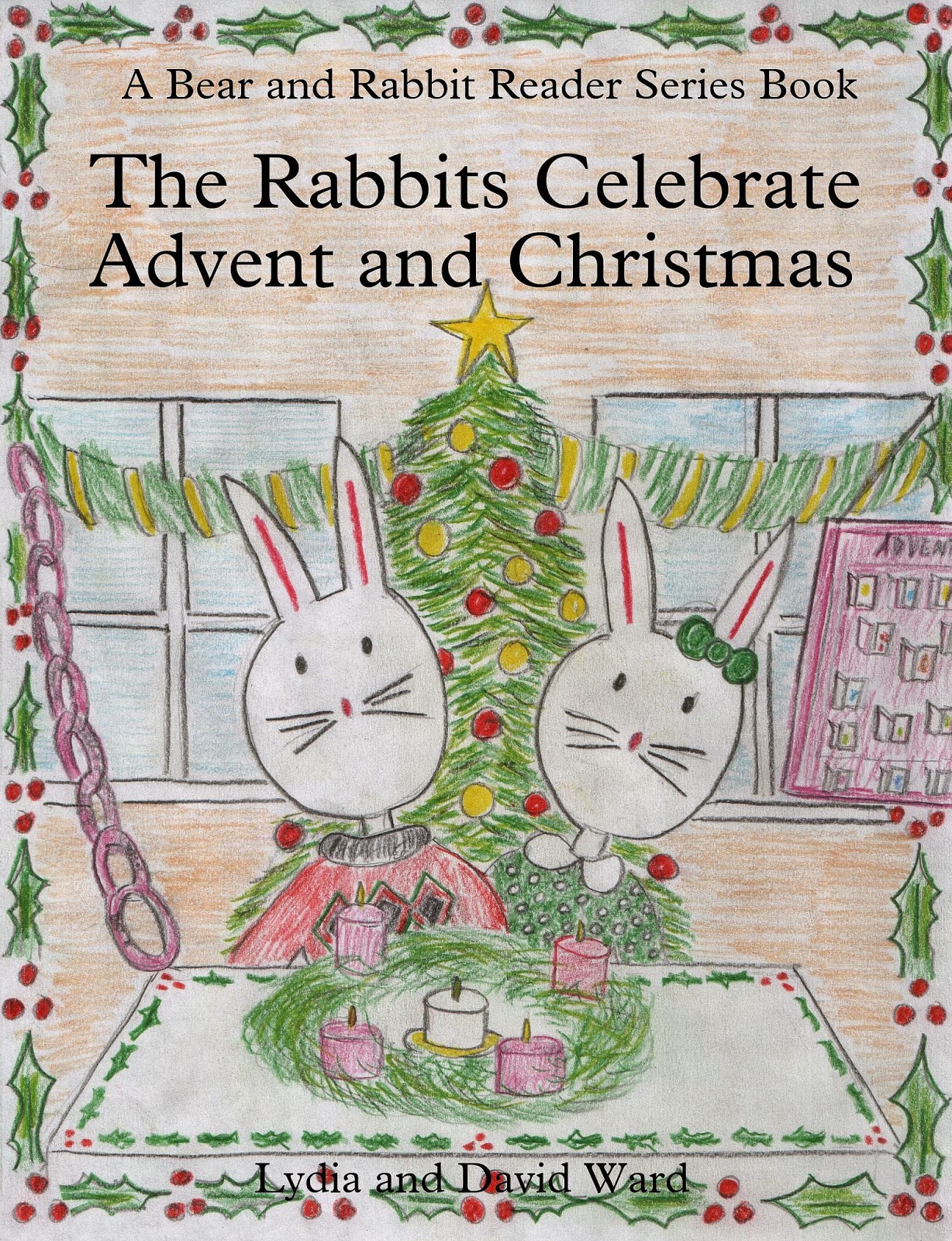
Several years ago, I wrote an Advent and Christmas-themed Rabbit book with my then seven-year-old daughter which eventually became the second book in the Bear and Rabbit Reader Series--The Rabbits Celebrate Advent and Christmas. For the Rabbit Family, like so many others, Advent and Christmas go together.
In this colorfully illustrated book, Tom and Martha Rabbit are excited that Christmas is only weeks away.
Join them as they prepare for Christmas during Advent. And then come
along with them for more fun with their family on Christmas Day.
The Bear and Rabbit Book Series is for story time, bedtime reading, and for early readers. The stories include fun illustrations on every page.
The Rabbits Celebrate Advent and Christmas is currently available as a PDF on
Etsy or as an eBook for
the Nook, for
Kobo, and for
the Kindle.
For purchases on Etsy, use the coupon code THANKSGIVING2015 to get a 40% discount! (The coupon code is good through November 28th.)
For more information, you can visit the the
Bear and Rabbit Reader Series Facebook page.
Labels: eBook
Posted by David at
7:30 AM
|
Comments (0)
|
Saturday, November 14, 2015
Looking for Discounts on Catholic Items? Check Catholic Deals Online.
I recently became aware of a great web site which pulls together online discounts for Catholic items. (I became aware of it via my daughter who saw it on
Catholic Inspired; she is very excited about it.)
The web site,
Catholic Deals Online, is run by a mother who is also a blogger and freelance writer. On the her web site, she posts items which are on discount or have a special offer. The items are primarily Catholic. She also does include items that are not Catholic, but she does not include anything that would be considered anti-Catholic. (I would do the very same.)
Currently, she is featuring items for Advent. If you are on the ball and already getting ready for Advent, you might want to check out her site. Even if you are not shopping for Advent, any time you you are looking for discounted items, remember to check
Catholic Deals Online.
Labels: Resource
Posted by David at
7:30 AM
|
Comments (0)
|
Monday, November 09, 2015
40% off Sale on the Rabbits' Thanksgiving and other Items on Etsy
Looking for a good children's eBook for Thanksgiving?
The Bear and Rabbit Book Series is for story time, bedtime reading, and
for early readers. The stories include fun illustrations on every page.
And now on Etsy, the
Rabbits' Thanksgiving eBook (PDF) is available for 40% off. Simply use the coupon code THANKSGIVING2015 at checkout. The coupon is good through November 28th. It can be applied to anything in the store. To get 40% off the Rabbits' Thanksgiving or any other book in the store, go to the
LightStoneGoods store on Etsy.
Labels: eBook
Posted by David at
8:00 PM
|
Comments (0)
|
Monday, November 02, 2015
November, Thanksgiving, and The Rabbits' Thanksgiving eBook
The month of November brings the U.S. holiday of Thanksgiving, and for me, a reminder to give thanks every day.
Last year, the first Bear and Rabbit Reader book--The Rabbits' Thanksgiving--was released. I am grateful for everyone who has supported this book and the other eBooks in the series which have since been released.
In this colorfully illustrated book, the Rabbit Family celebrates Thanksgiving at school and home with their friends and family. In this story for young readers, you can join the rabbits Tom and Martha along with their family for a fun-filled Thanksgiving celebration.
The Bear and Rabbit Book Series is for story time, bedtime reading, and for early readers. The stories include fun illustrations on every page.
The Rabbits' Thanksgiving is currently available as a PDF on
Etsy or as an eBook for
the Nook, for
Kobo, and for
the Kindle.
For purchases on Etsy, use the coupon code THANKSGIVING2015 to get a 40% discount! (The coupon code is good through November 28th.)
For more information, you can visit the the
Bear and Rabbit Reader Series Facebook page.
Labels: eBook
Posted by David at
9:00 PM
|
Comments (0)
|